

My client looked down lovingly to the ring finger of her left hand.
"This is my engagement ring. I've worn it since the day my husband proposed," she smiled. "I could never be without it - but my beautiful tourmaline does seem to have lost a lot of its sparkle in recent years...."
Her voice trailed off as she stared down at her green tourmaline engagement ring, the centre stone flanked by two round brilliant cut diamonds.
Having known my client (and her husband) for some time - and the fact that their marriage was already one of many years - it would have been indiscreet to ask the age of her engagement ring.
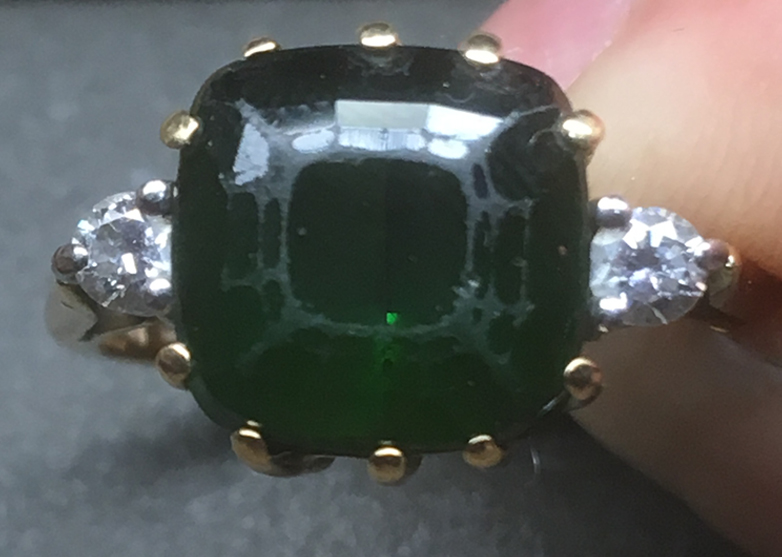

Even the most cursory glance at her cushion cut tourmaline showed that whilst this gemstone must have once been extremely impressive, through decades of continuous wear the facets of the stone were almost completely worn away.
Likewise, the claws of the 18K gold ring were very worn and asymmetrical, showing that they had been inadvertently knocked and damaged at some time.
My client looked up from her engagement ring and continued, "I entirely understand if there's nothing that you can do to help. My ring has been with me for so many years..."
I paused, wondering what exactly to say to my client, given the deep emotional attachment she clearly had for the piece.
Gently smiling, I simply replied, "I think your ring is beautiful. Nothing would make me happier than to see your tourmaline sparkle once again. That is, if you will trust me with such an important task..."
Like so many pieces of fine jewellery that pass across my bench for repair or remodelling, the value of this ring couldn't be expressed solely in monetary terms - but also in the great sentimental value it held for my client too.
One thing was certain - this was going to be an exciting but very challenging commission.
I hoped I was up to the task...
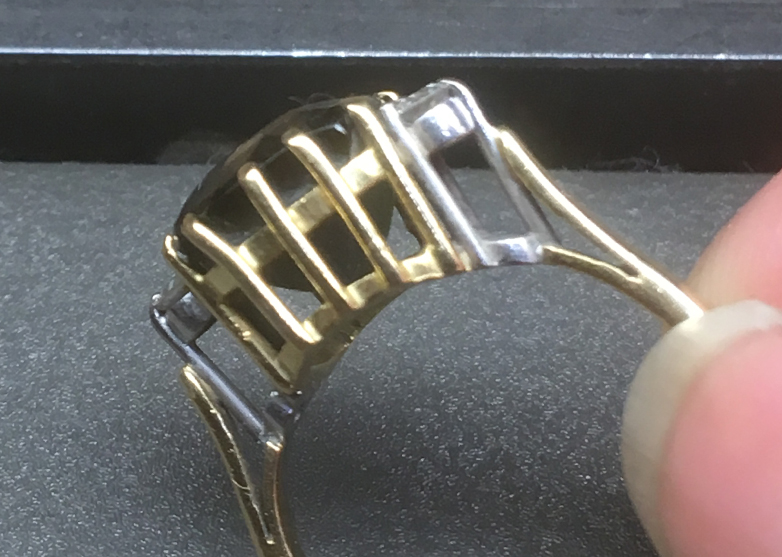
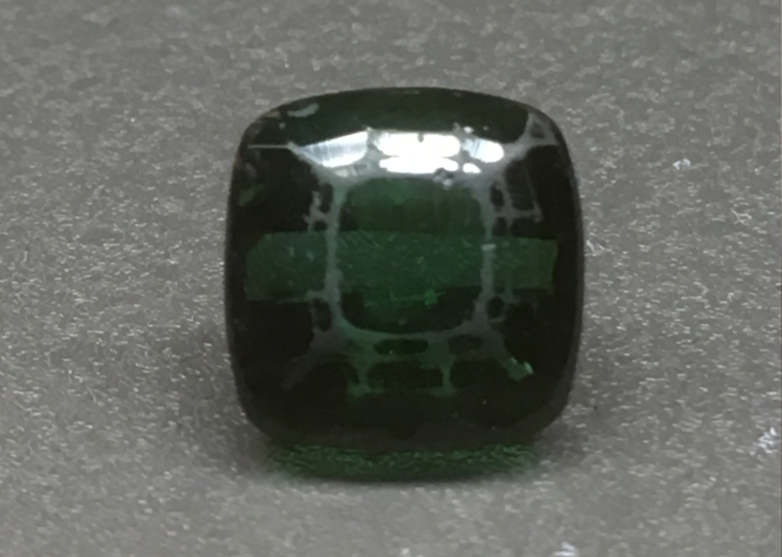
The first task for this commission was to carefully unseat the green tourmaline centre stone to assess the best possible "next steps".
Could this gemstone be rescued?
Removing the tourmaline from the setting clearly showed that virtually none of the original facetting was apparent on either the table or crown of the stone,
In fact, from the top, this tourmaline looked more like a smooth, domed cabochon.
Gemstones that have picked up "scuffs" and "dings" (scratches and small chips) over the years can often be re-polished to correct many, if not all, of these defects.
There was, however, one major problem with my client's tourmaline. There were simply no facets on the stone left to re-polish.
There was nothing for it - I had to ask my client's permission to re-facet her gemstone.
Having explained to my client that for her green tourmaline to sparkle once again, it would be necessary to re-facet the stone - and that this process would result in the gemstone losing some if its original carat weight - my client willingly agreed to the re-cutting process.
Also, she asked, would I be able to remake her original engagement ring in a similar style but in 18K white gold, as she felt white gold would be more flattering to her complexion now she was little older.
Here is the 18K white gold ring I designed for my client, keeping both the spirit and style of her original engagement ring but with strong, protective prongs to secure her tourmaline and using a more substantial amount of gold in this new piece than in her original engagement ring.
Many clients ask if I personally cut the gemstones I use.
Although I confess to being a bit of a gem geek (and am a Gem-A certified gemmologist to boot!) gem cutting is a highly specialised career in and of itself.
That said, whether I am in London or Johannesburg, I am blessed to know some of the world's most talented gem cutters (called lapidaries).
As this ring re-modelling was undertaken in my London studio, I paid a visit to my lapidary, Stuart, who resides in one of the small workshops that hide away above (and often below) the retail store fronts of Hatton Garden, the centre of London's jewellery district.
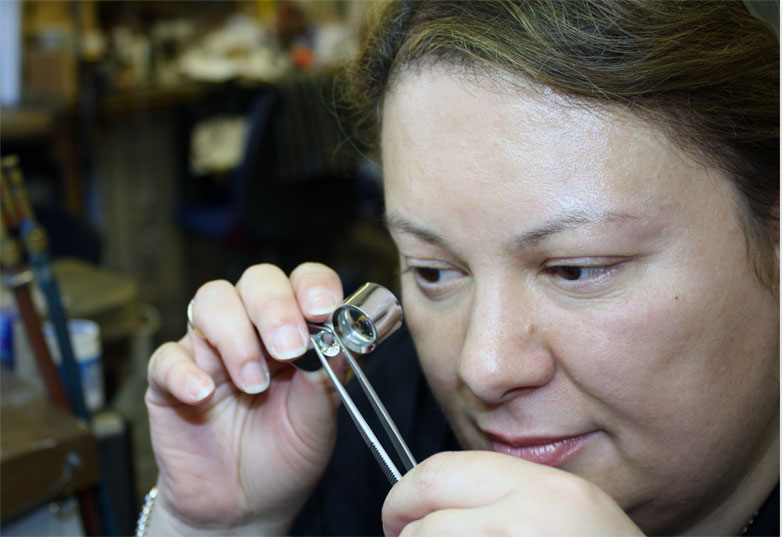
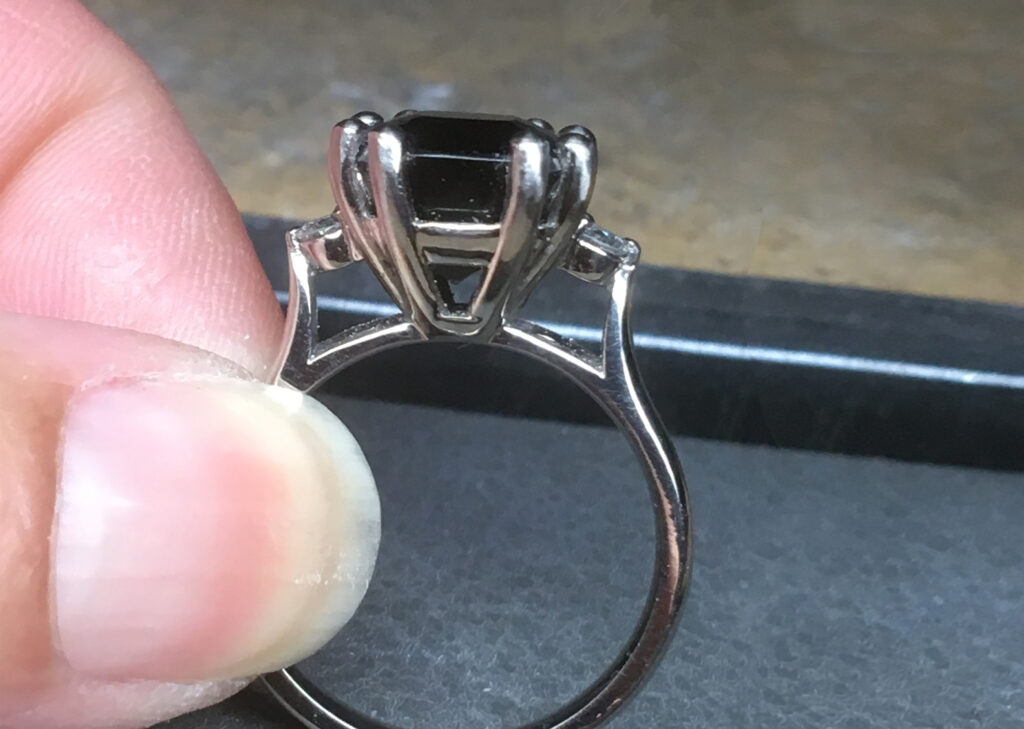
Having received a call from Stuart to come and collect the re-cut tourmaline, my heart was in my mouth as I pressed the door buzzer to gain access to his building.
Had Stuart been able to rescue and revitalise this very special stone?
I'll tease you a little longer by showing you the side view of the newly made ring after I had set my client's re-cut green tourmaline into her re-modelled white gold engagement ring.
And here it is! My client's re-faceted cushion cut green tourmaline set in her re-modelled 18K white gold engagement ring.
The re-cutting work conducted by my lapidary, Stuart, was sensational. This time-worn tourmaline now literally dances in the light.
The round brilliant cut accent diamonds also seem to sparkle more brightly as they rejoice at the glory of this gorgeous re-cut tourmaline.
Even more impressive was that the carat weight lost during re-faceting was far less than that which I had anticipated.
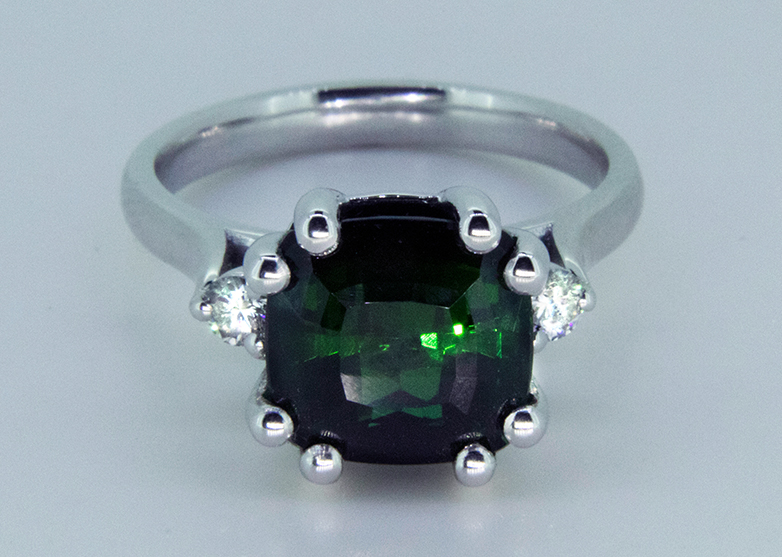
The ring design, although now in white gold, was very similar to the original piece. The prongs were slightly thicker and more evenly spaced and the quantity of 18K gold used to make the ring was also far more substantial.
It only remained for me to return this much loved engagement ring to the place where it rightfully belongs - on my client's ring finger
My client was thrilled with the transformation of her engagement ring.
The difference in her re-faceted cushion cut green tourmaline could really not be more pronounced.
Very few physical objects can touch the heart more deeply than the gift of fine jewellery. Emotions and memories even more precious than the materials from which the jewellery is created.
I was honoured to have been entrusted with the renovation and re-making of this beautiful engagement ring, not least knowing that it will now continue to be worn with love and will dazzle for many more years to come.