

• Skip to primary navigation
  • Skip to main content
JULIA PHARO JEWELLERY
Request an Appointment
Menu
  • Jewellery
    • Close
    • Rings
    • Earrings
    • Necklace & Pendants
    • Bracelets & Bangles
    • Gentleman’s Jewellery
  • Bespoke
    • Close
    • Bespoke Design Gallery
    • Your Bespoke Commission
    • Request An Appointment
  • Engagement
  • About Julia
    • Close
    • Julia’s Story
    • Julia’s Promise
    • Ethics & Responsibilities
    • News from the Studio
  • Contact Us
    • Close
    • Private Client Services
    • Request An Appointment
    • Contact The Studio
    • Frequently Asked Questions
Make an Appointment
julia pharo jewellery
  • Jewellery
    • Rings
    • Earrings
    • Necklace & Pendants
    • Bracelets & Bangles
    • Gentleman’s Jewellery
  • Bespoke
    • Bespoke Design Gallery
    • Your Bespoke Commission
    • Request An Appointment
  • Engagement
  • About Julia
    • Julia’s Story
    • Julia’s Promise
    • Ethics & Responsibilities
    • News from the Studio
  • Contact Us
    • Private Client Services
    • Request An Appointment
    • Contact The Studio
    • Frequently Asked Questions

Articles


https://juliapharo.com/wp-content/uploads/2026/07/WIMBLEDON-TENNIS-BRACELETS-STRIPED-ULR.mp4

How a Match Stopping Moment Changed Jewellery Forever

The elegant diamond line bracelet we now know as the “tennis bracelet” owes its name to one of the most memorable moments in sports history, at least from a jeweller’s perspective!

During the 1987 U.S. Open, then-world-number-one tennis player Chris Evert was in the midst of a hotly contested match when her delicate diamond line bracelet snapped and flew from her wrist.

Evert, known for wearing her beloved George Bedewi-designed piece during play, immediately requested officials pause the match so she could safely recover all the sections of her broken diamond line bracelet. She later referred to the piece as her “tennis bracelet” in interviews and the catchy moniker caught on permanently.

Before this dramatic incident, the style was known more formally as a “line bracelet” or “eternity bracelet,” terms that reflected its defining characteristic: a continuous row of uniformly matched stones set in articulated, flexible platinum or gold links.

Line Bracelets: A Century-Old Tradition

While the “tennis” label is relatively new, the style itself dates back to the 1920s Art Deco period.

Women of that era favoured stacked platinum and old European-cut diamond line bracelets, prized for their geometric precision and understated elegance. Whilst time moved on, the design philosophy of the line bracelet remained unchanged – homogeneous gemstones creating visual continuity that catches light from every angle.

Today’s tennis bracelets typically feature dozens of matching diamonds set in precious metals, maintaining that essential Art Deco legacy of craftsmanship and symmetry.

Throughout the decades, certain women have made the tennis bracelet synonymous with their personal style:

Princess Diana frequently wore a multi-row Cartier diamond tennis bracelet, often paired with her signature pearls and evening gowns. Her comfort with wearing fine jewelry in informal contexts mirrored Evert’s own approach to sportswear elegance.

Elizabeth Taylor, whose legendary collection included some of the most famous jewels in history, regularly wore tennis-style bracelets on red carpets and during film appearances. Her taste for bold, substantial pieces elevated the style’s prestige.

Madonna brought the tennis bracelet to contemporary pop culture, wearing sleek diamond versions onstage and at high-profile events. Her choice of Cartier pieces demonstrated how the style transcends generations.


Tennis Bracelets for the Modern Collector

Exhibiting ultimate wearability and versatility, there really are very few occasions where the sleek and scintillating line of a tennis bracelet would look out of place.

Whether featuring diamonds or precious coloured gemstones (or a combination of both!), this timeless classic adds “wrist appeal” to any outfit from smart casual cottons and linens to the most beautiful bridal gown.

Gifted to a loved one, a gold or platinum diamond tennis bracelet is invariably a most welcome addition to any jewellery collection – ideal to commemorate an anniversary, birthday or other notable event.

As a reward to oneself, a diamond or precious coloured gemstone tennis bracelet is the ultimate accolade. A sleek, stylish, sparkling yet subtle constant and deeply personal visual reminder of life’s ambitions achieved.

The tennis bracelet remains one of fine jewellery’s most versatile investments. Its timeless design makes it appropriate for formal occasions yet sufficiently understated for everyday wear, the same duality that first captivated Chris Evert on the tennis court.

Whether set in platinum, gold, or increasingly, a mixed precious metal bi-colour configuration, the tennis bracelet continues to represent an ideal marriage of craftsmanship, carat value, and enduring style—a worthy addition to the collection of any discerning jewellery aficionado.


To explore the stunning range of ready-to-wear and bespoke Diamond & Coloured Gemstone Tennis Bracelets from Julia Pharo Jewellery, please contact the  studio.


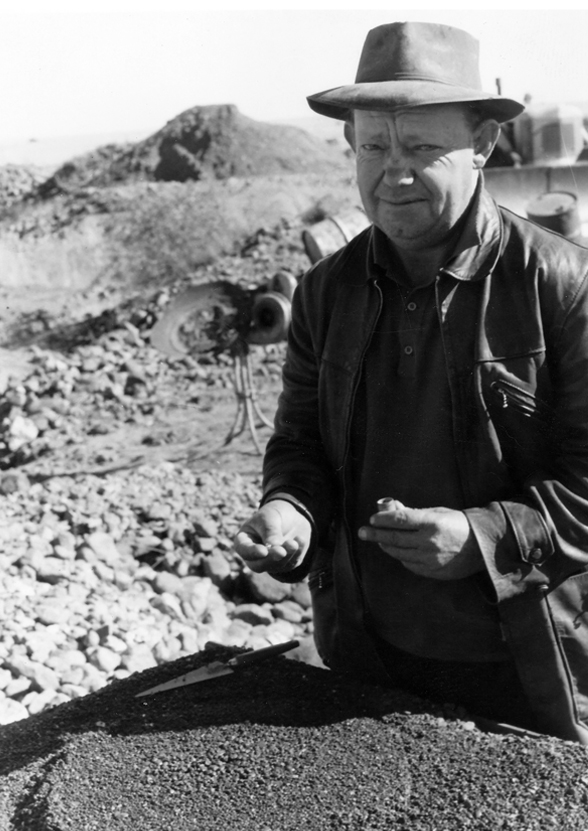
My story simply wouldn’t have begun without the influence of the man in this picture.

This is my Grandpa (Oupa in Afrikaans), Willem Schneider, who was a real-life Indiana Jones and a huge influence in my life – nurturing my passion for gemstones.

Oupa Willem was an accomplished pilot, adventurer, and diamond miner (and who always seemed to have a boiled sweet in his shirt pocket for me!).

This is a photo of Oupa sorting rough diamonds at his mine. It’s how I’ll always remember him.
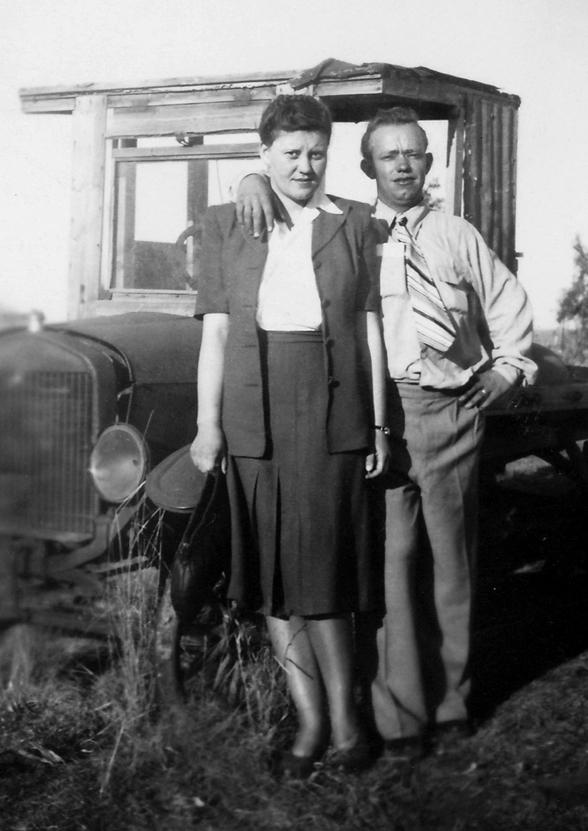
Behind every strong man is an even stronger woman.

Here, Oupa proudly stands with his wife, Lily, who remained the matriarch of my family until her passing in 2021.

An accomplished pilot, Oupa loved being behind the joystick of his plane – whether flying to his diamond mine or crop-dusting for the local farmers. Oupa welcomed any excuse to take to the air.

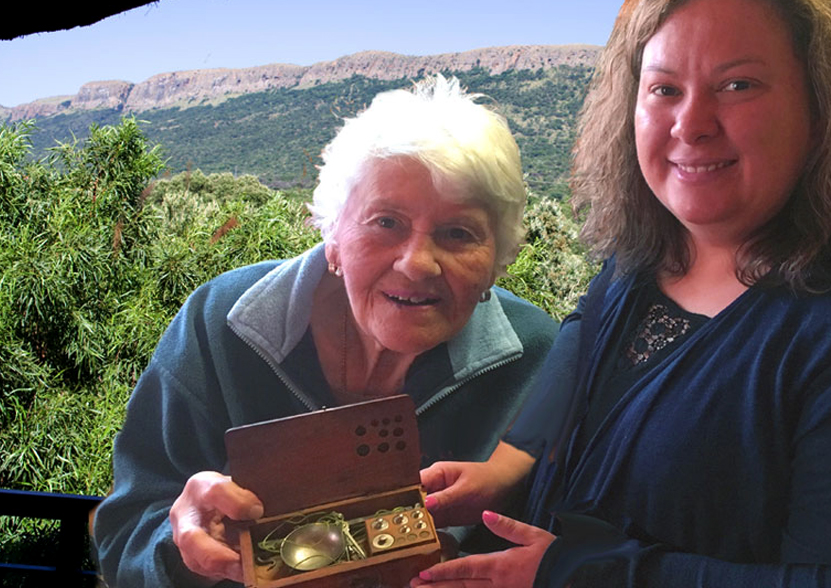
Following the death of my grandfather, my uncle and cousins continued diamond mining in South Africa and neighbouring Botswana, a family profession that continues to this day.

The proudest moment in my life came when my grandmother presented my grandfather’s diamond scale to me – entrusting this essential field tool to the next generation of gemstone hunters.
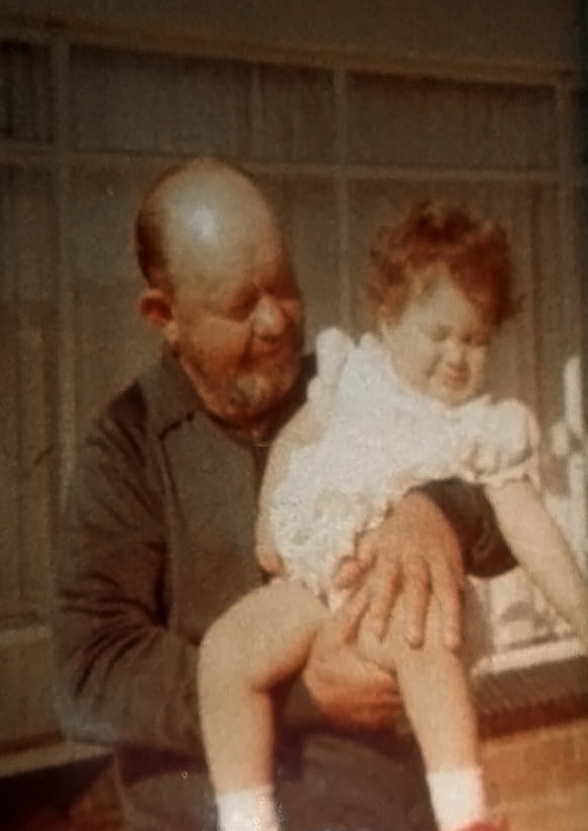
This is my favourite photograph of my beloved Oupa – his big, strong arms holding a young girl he used to call his “little rough diamond”.

Although I’ll never feel those strong arms around me again, I hope that somehow he can see the incredible journey he has inspired me to take – and with that familiar twinkle in his eye realise his “little rough diamond” is slowly becoming slightly more polished on life’s lapidary wheel.

Ek mis jou Oupa
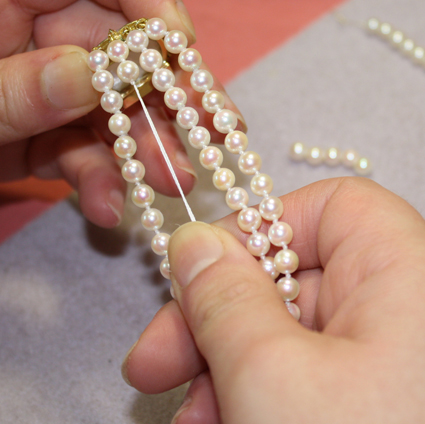

 Pearl StringingThere’s no denying the elegance of a classic pearl rope, now enjoying a welcome renaissance thanks to the popularity of movies and television shows such as The Great Gatsby, Downton Abbey and Mr. Selfridge.
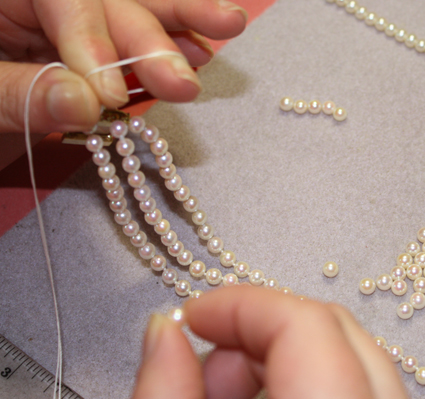
These incredibly versatile necklaces can be worn in so many ways and, as such, are often a “go to” piece in many of my clients’ jewellery wardrobes.

To make sure your pearl rope remains in tip top condition, it’s a good idea to thoroughly inspect your necklace every year to check for signs of wear to the thread that could spell disaster at a later date.

Here are two early warning signs that your pearl strand could use a little TLC by receiving a re-string.

• Fraying or stretching of the thread at the clasp.
If your pearl necklace features a clasp, this is usually the primary point of wear for the jewellers’ silk used to string your pearls. Stretching and fraying of the silk can occur around the clasp for many reasons. It’s the point which receives most tension when putting on and removing the necklace. Natural grease and oils from the fingers can also cause deterioration of the silk from handling the clasp.

• Stretched or frayed thread between each knot in your necklace.
Hopefully the thread used to string your pearl necklace is knotted between each pearl to prevent the total disaster of loosing every pearl should the jewellers’ silk break (if your necklace isn’t knotted, please get your necklace re-strung correctly as soon as possible!). However, over time, the silk can stretch leaving an unsightly long string between each knot, with each pearl rattling up and down on its stretched section of thread, risking fraying of the thread and damage to the pearls as they knock harshly against one another. Thread stretching is particularly common in necklaces of opera length 36″) or flapper/rope length (50″ to 70″) – especially if the pearls are heavy. This stretching of the thread is simply caused by gravity and stretched silk on a necklace should be replaced as soon as it becomes evident to prevent eventual breakage.

Whilst there are lots of different techniques to string pearls (including some amazing looking gizmos to help you knot each pearl) traditional hand stringing and knotting is an art that is seldom widely taught – usually being passed on from one artisan to their apprentice.

Pearl Stringing

I was very fortunate to have learned how to correctly string pearls and have had the privilege to re-string some truly beautiful necklaces for many of my clients.

No detail of the re-string is overlooked during my work on your necklace – from choosing the correct grade of jewellers’ silk most appropriate to the size of pearl and total weight of the strand; through to secure finishing of the piece by working silk back through a number of the pearls (not simply tying the thread off at the end!).

Necklaces are strung only with the finest French silks and can be traditional off-white in colour or dyed to blend with the colour of your pearls to make the knotting entirely unobtrusive.

Re-stringing is a very inexpensive way to give your necklace an entirely new lease of life.

Whilst we don’t offer re-stringing to the general public, as a service exclusively available to our existing clients, if you have a pearl rope that has seen better days, please do get in touch to discuss professional re-stringing.


If you are seeking inspiration for your dream engagement ring, here’s a fascinating fashion flashback showing ring styles through the decades from Mode.com

Beginning in 1910 with a classic Solitaire Diamond Ring (featuring an old style round cut diamond set into a six prong gold mounting) through to a modern-day fancy yellow cushion cut diamond nestled in a brilliant cut white diamond halo surround – this short little video takes us on an ecletic journey through a remarkable collection of rings from Peter Jon Shemonsky Fine Antique & Estate Jewellery.

From vintage to modern, which ring did you fall in love with?


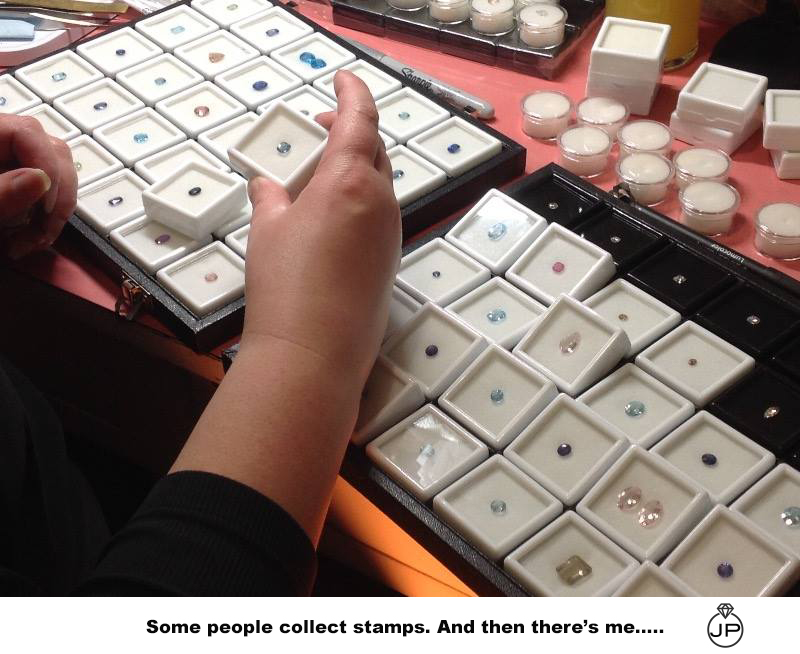
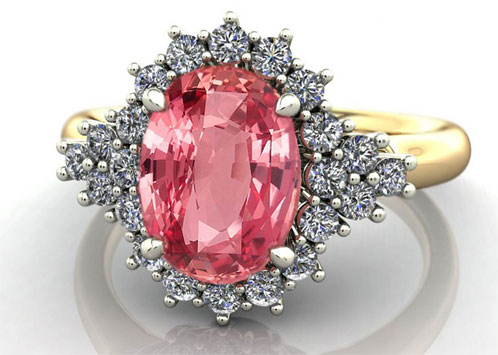
As you can see from the picture above, I’m very fortunate to work with some truly remarkable gemstones – but even though all of these gemstones are absolutely stunning, I wanted to share a picture of my most treasured stone with you.

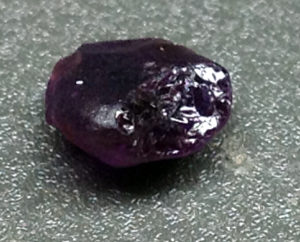
Grandpa's SapphireI’ll admit, it’s nothing much to look at and isn’t very big, but this uncut sapphire was given to me as a little girl by my grandfather, who found it whilst inspecting the rough diamonds at his opencast mine.

At that age, I had no idea that my life’s journey would take me into a career as a jeweller – nor any idea of the very short time I would know my grandpa before the fatal stroke that would carry him away from our family.

I treasure this uncut sapphire not because it’s particularly valuable, but because of its link to a very special person in my life. Whenever I’m working with gemstones (especially diamonds!), I feel my grandpa near to me.

I’ve seen this intangible connection countless times with the bespoke pieces of jewellery I’ve had the honour to make for many of my own clients.

Whether as a gift between lovers; a present from a parent (or grandparent) to a child; or a special ring to say “I Love You” – the greatest gift is the hidden meaning within the jewellery, not simply the piece itself , no matter how beautiful it may be.

This fascinating video from CNBC is about father and son diamantaires Larry and Scott West, who run L.J. West Diamonds, a supplier of fine diamonds to the trade in New York City. 

The Cutting Wheel

The Wests invested in a stunning 5 carat Fancy Pink Diamond, bought at auction for a cool $3.2 million.

Drawing on their 41 years of experience in the diamond trade, Larry and Scott were convinced that, as beautiful as this remarkable gemstone was, its colour could be further enhanced by careful refacetting to subtly alter the facets and thus create more depth and intensity of colour in the stone.

As well as making this 5 carat Pink Diamond even more visually desirable, correct refacetting could also increase the value of the gem to more than $7 million.

The downside?

Just one wrong move during refacetting and the entire gem could literally shatter…

This fascinating video gives a remarkable insight into the secret world of the diamantaire – not least the steady-handed skill of the diamond cutters and polishers, often the unsung heroes of the diamond trade.


  • Page 1
  • Page 2
  • Go to Next Page »
  • This field is for validation purposes and should be left unchanged.
  • Get "In The Loupe"
    News From The Studio

Visit us in person or via
our online virtual studio

REquest an Appointment

Bespoke Jewellery

  • Bespoke Design Gallery
  • Your Bespoke Journey
  • Request An Appointment

Choosing The Perfect Ring

  • Her Dream Engagement Ring
  • View Dress Rings

More About Gems, Jewellery & Julia

  • Jewellery Articles
  • Client Stories & Testimonials
  • In The Media

Our Values, Our Promise

  • Julia’s Story
  • Julia’s Promise
  • Ethics & Responsibilities

Further Information

  • News from the Studio
  • Jewellery Care
  • FAQs
  • Website Terms of Use
  • Privacy Policy

© 2012 - 2026, Julia Pharo Jewellery. All rights reserved. Your use of this website is subject to our Terms.

Protected by Copyscape